Space Mark Design Doc
TL;DR
Space Mark is a Station module that allows data to be aggregated and stored on Filecoin in a decentralised way. Space Mark can be used as a building block - or what we call an atomic module - by other Station modules. Over time, Space Mark can be used to connect Filecoin to other Web3 networks and position Filecoin as the storage layer for Web3, with value flowing into the Filecoin Network from elsewhere.
Related Work and Proposals
- Dag House Architecture and Aggregator Logic
High Level Data Flow
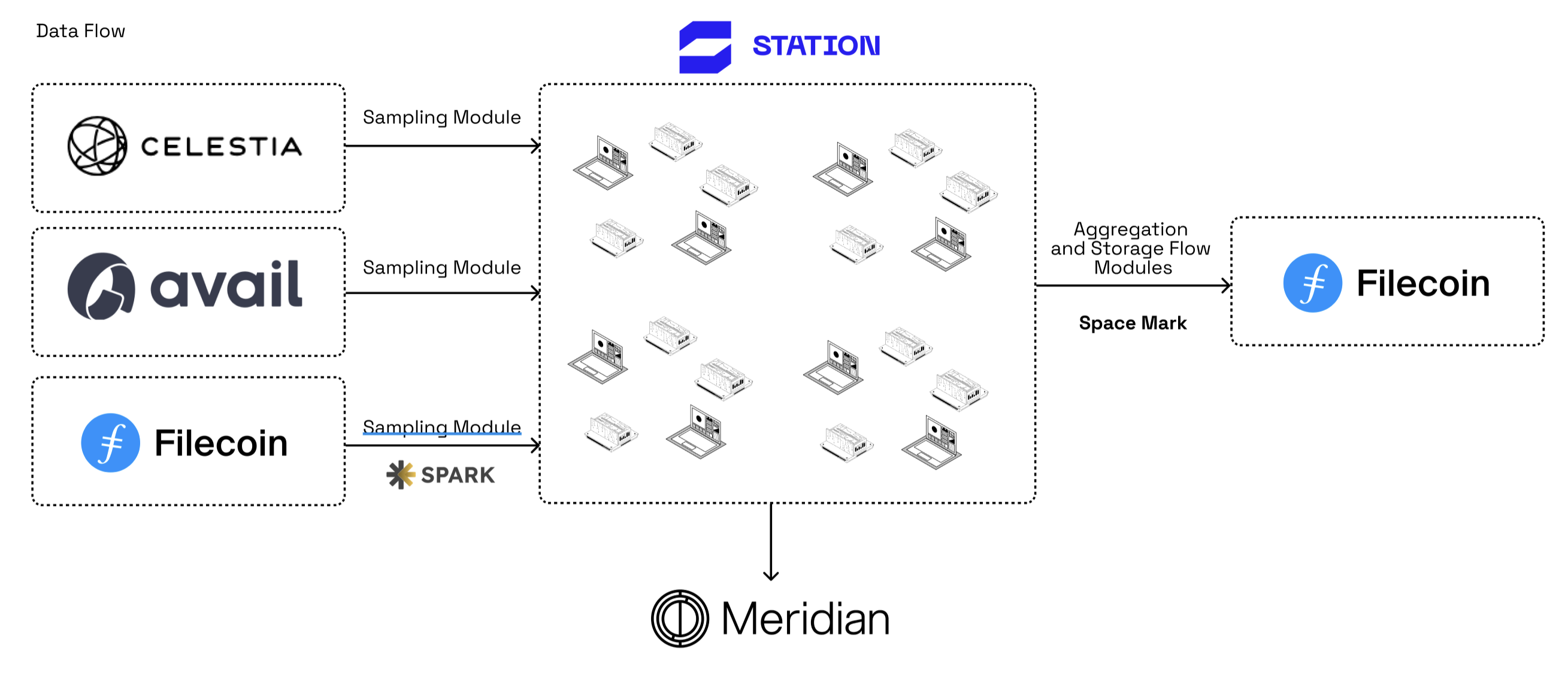
Data Flow
- Station nodes perform tasks. They make requests to different Web3 networks and gather the response information.
- This information is used by Meridian to evaluate the contribution of each Station Operator to each module.
- The task data is aggregated and batched into storage deals by the Space Mark module.
High Level Value Flow
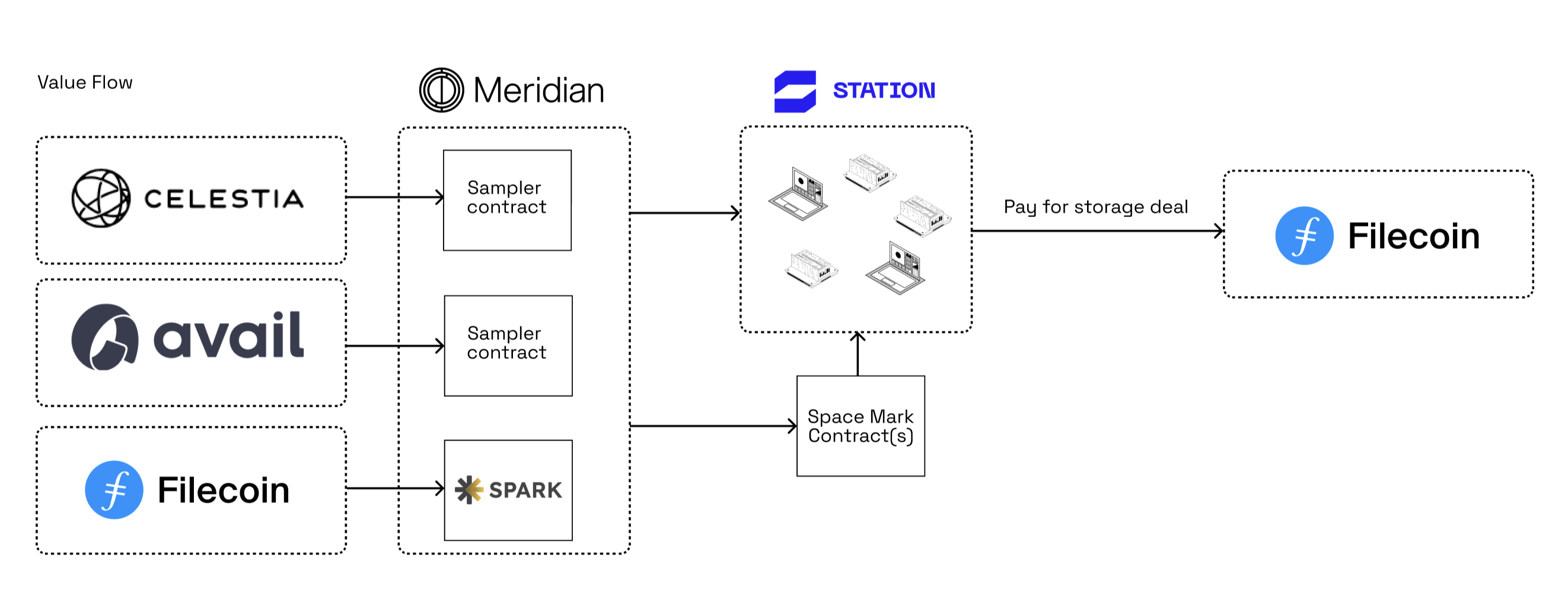
Value Flow
- Web3 Network stakes a large amount of tokens that have been put aside for this venture. Let’s say equivalent to $360k of tokens, with an APY of 10%. This equates to $3k per month of staking rewards.
- Each month this $3k of tokens is sent into the relevant Meridian Smart contract to incentivise Station Operators to do tasks. The Station nodes sample these other networks to win rewards.
- Meridian contracts can pass value into other Meridian contracts as well as to Station operators. The sampling modules pay out x% of their income to Space Mark, the decentralised Storage module.
- Station nodes are looking out for new tasks to do on the storage side. These include storing buffers and aggregating data for Filecoin deals. Station nodes complete these tasks and store data on Filecoin. These storage deals are paid deals so that vlue is flowing into Filecoin from other Web3 networks.